There's a New Chancellor. Here's What Changes for You
John Healey is now Chancellor, and his first Budget lands on 28 October. Here's what's actually confirmed, what's speculation, and what to watch.
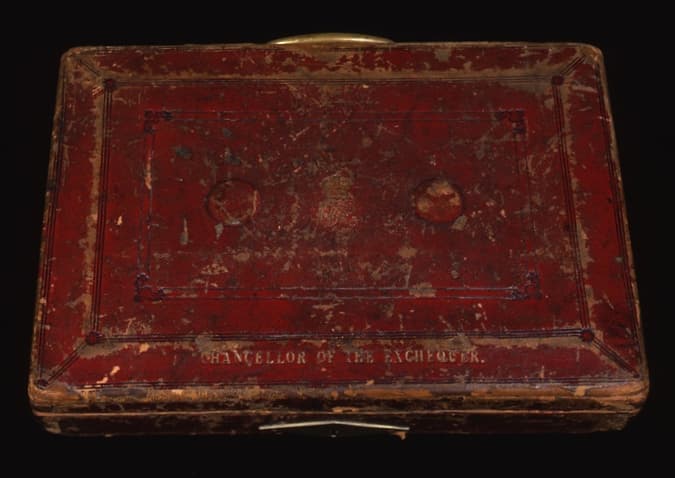
A New Chancellor, A New Budget Date
Keir Starmer resigned in July. Andy Burnham, previously Mayor of Greater Manchester, took over as Prime Minister on 20 July, promising what he called the biggest changes to government in forty years. Rachel Reeves left the Treasury in the reshuffle that followed. John Healey is now Chancellor.
Healey isn't a new face at the Treasury. He was a minister there under Tony Blair and Gordon Brown, including a stint as Financial Secretary to the Treasury, before three decades in Parliament and, most recently, a term as Defence Secretary that ended in June when he resigned over the pace of planned defence spending increases. Weeks later, Burnham brought him back at the top of government finances.
His first Budget is confirmed for Wednesday 28 October 2026.
For anyone with a pension, an ISA, or a plan that assumes today's tax rules hold for the next twenty years, a new Chancellor is worth paying attention to. Not because anything has changed yet. It hasn't. But because the direction of travel over the next few months will shape what does.
What He's Actually Signalled So Far
Strip out the speculation and a few things are on the record.
Fiscal discipline, not a reset. Healey has told Treasury staff that fiscal discipline is "the bedrock of economic stability and national security," and has indicated he intends to work within the existing fiscal rules rather than tear them up. That's a signal to gilt markets as much as to voters: expect continuity in how the sums are done, even if the headline decisions change.
The state pension income tax exemption stays. The Treasury has confirmed that pensioners whose only income is the full new or basic State Pension will remain exempt from income tax, addressing the fiscal drag problem created by the triple lock pushing the State Pension closer to the personal allowance each year.
The triple lock stays, for now. Burnham has reaffirmed the manifesto commitment to keep it. This year's 4.8% rise, taking the full new State Pension to £241.30 a week, was already locked in before the reshuffle and isn't affected either way.
No commitment on the personal allowance freeze. Asked directly whether the frozen income tax thresholds might finally be unfrozen, Burnham said there was "no commitment" either way, and that the question would be dealt with at the Budget. That's a deliberate non-answer, and probably the most honest one available five months out.
What's Speculation, Not Policy
This is the part worth being careful with, because most of what's circulating right now is briefing and commentary, not government positions.
Capital gains tax and a wealth tax are the areas most commentators expect to move. Neither was covered by Labour's 2024 manifesto pledge not to raise taxes on "working people," which was understood to mean income tax, employee National Insurance, and VAT. That leaves CGT, and the broader idea of a wealth tax, as the more politically available levers if the Budget needs to raise revenue. Nothing has been formally proposed.
There's a fiscal gap to fill. Estimates from economists put it at £22 billion or more, with very little room left to borrow more within the current fiscal rules. That's the backdrop against which every Budget speculation story is being written this autumn, and it's the single biggest reason to expect tax rises of some kind on 28 October.
The previous Chancellor's unfinished business is still sitting there. Reeves' Autumn Budget 2025 left several changes in the pipeline that hadn't yet taken effect when she left: pensions coming into the scope of inheritance tax from April 2027, the cash ISA allowance for under-65s dropping from £20,000 to £12,000 from April 2027, and salary sacrifice pension contributions losing National Insurance relief above £2,000 a year from April 2029. None of that has been reversed. None of it has been explicitly reconfirmed by Healey either. A new Chancellor inheriting a predecessor's half-implemented reforms is exactly the kind of thing that can get quietly kept, quietly watered down, or quietly dropped at the next fiscal event, and there's no way to know which until it happens.
What This Means for Your Plan
Honestly, not much yet, and that's the point worth sitting with rather than rushing past.
Nothing legally in force has changed. The tax rules that applied to your pension, your ISA, and your income in July still apply today. A change of Chancellor is a change of who's making decisions, not a change of the decisions themselves, until a Budget or Finance Bill actually says otherwise.
The temptation in moments like this is to act on the rumour rather than the rule: to rush a pension withdrawal because CGT "might" rise, or restructure an estate because a wealth tax "might" appear. That's usually a mistake. Briefings shift constantly between now and 28 October, and decisions made against a rumour that doesn't materialise are hard to undo.
Where it's worth paying closer attention is if you're already close to a specific threshold that speculation keeps pointing at: a large unrealised capital gain, an estate that would be affected by pensions and IHT interacting from 2027, or cash ISA balances near the current £20,000 limit. If any of those describe your situation, this is a reasonable moment to have a conversation with a regulated financial adviser about timing, not to act alone on what's currently just Budget-season noise.
What We're Watching for 28 October
- Whether CGT rates or the annual exempt amount move, and by how much
- Any concrete wealth tax proposal, or confirmation that one isn't coming
- Whether the pensions-into-IHT change proceeds as planned for April 2027, is delayed, or is amended
- Whether the cash ISA cap for under-65s is reconfirmed, softened, or scrapped
- Any move on the frozen income tax and personal allowance thresholds
- Confirmation of next year's triple lock uprating figure
We'll cover the Budget itself in detail once it lands. Until then, the honest answer is that most of what you'll read between now and 28 October is educated guessing, some of it more educated than others.
A Few Things to Be Clear About
This isn't financial advice, and Scenarios isn't FCA-authorised or a regulated adviser. Nothing in this piece should be read as a recommendation to change your pension, ISA, or estate planning ahead of the Budget. If speculation about CGT, IHT, or a wealth tax is relevant to your specific position, that's a conversation for a regulated adviser, who can weigh your actual numbers against what's confirmed rather than what's rumoured.
If you want to see how your own plan holds up under today's rules, and stress-test it against a range of "what if the Budget changes X" scenarios once we know more, you can build your plan for free.
Further Reading
- CNBC. "All eyes are on John Healey, the UK's new finance minister. Here's what's at stake." cnbc.com
- Bloomberg. "UK Chancellor John Healey to Deliver First Budget on October 28."
- Saffery. "UK tax changes under Andy Burnham and John Healey: what businesses and individuals need to know." saffery.com
- MoneyWeek. "Three tasks for new chancellor John Healey." moneyweek.com
- Morningstar. "Will New Chancellor John Healey Raise Taxes?" global.morningstar.com
Run 1,000 Monte Carlo simulations across your pensions, ISAs, and investments — completely free.
Get Started Free
